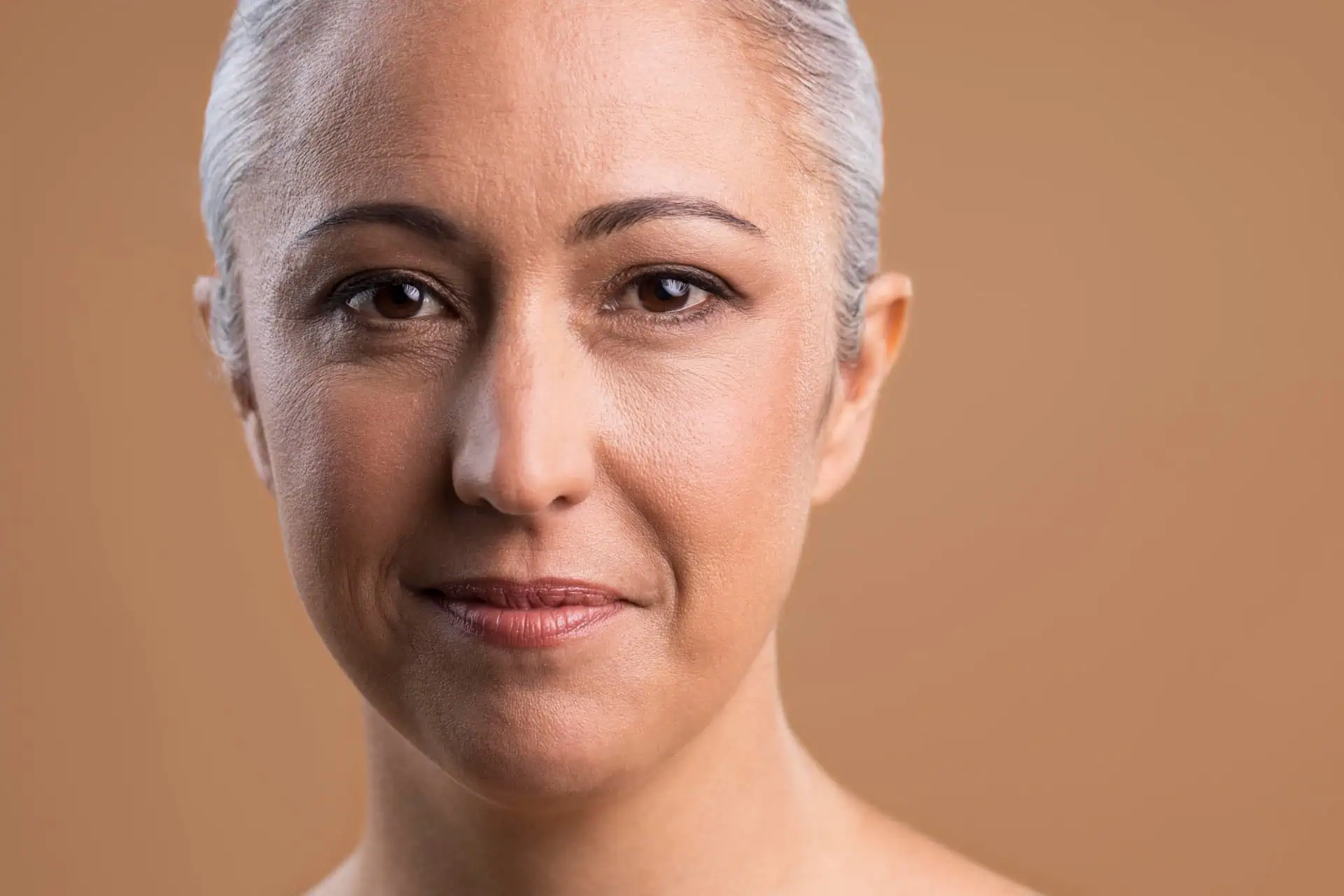
After the age of thirty, many people notice that the face no longer reacts exactly the same way to fatigue, sun exposure, or insufficient sleep as it did before. Wrinkles caused by pillows can remain longer in the morning, the dark under-eye area may become more pronounced, the skin may appear drier, and the first fine lines may appear. These changes are natural and usually do not occur overnight. Facial aging is a gradual process that is influenced by inherited factors, hormonal changes, lifestyle, environmental factors, and skin care habits. The goal is therefore not to stop the passage of time, but to maintain a healthy, well-groomed, and harmonious appearance for as long as possible.
The following will discuss the most common signs of facial aging, the underlying causes, and how the skin, fat tissue, muscles, and facial bones change. The article presents the most important steps for prevention, the possibilities of home skin care, and also modern aesthetic treatments. Finally, we also discuss why it is worth asking for a personalized consultation before any procedure. The emphasis remains on achieving a natural result.
The first signs of facial aging
In the early 30s, facial aging usually does not start with deep wrinkles. It is much more common for the skin to appear less plump, smooth, and even. Fine lines may appear around the eyes, and wrinkles may remain visible on the forehead or between the two eyebrows for a longer period after mimicry. The surface of the skin may become more rough, the pores may become more noticeable, and the previously quick fading of fatigue may become more persistent.
A common sign is uneven skin tone Yes. Under the influence of sunlight, lighter or darker pigment spots may appear, mainly on the forehead, cheeks, nose and above the upper lip. The area under the eyes may appear darker and slightly sunken, while the lines around the mouth may gradually become more pronounced. Initially, the eyebrows appear less defined, but later smaller sagging may also develop.
Not everyone experiences all changes at the same age. The shape of the face, the thickness of the skin, the intensity of the mimicry, sunbathing habits and body weight all influence which signs come to the forefront first. Some people see wrinkles more quickly than others, while others see pigment spots or loss of volume more quickly. Therefore, facial aging should not be judged solely based on age.
What happens to the skin over time?
The skin is not simply a protective covering; it is a complex organ. Its outermost layer is the epidermis, beneath which lies the dermis, which contains collagen and elastin fibers, among other things. Collagen contributes to the firmness of the skin, and elastin contributes to its elasticity. Over time, these fibers Its production and structure change, Therefore, the skin can gradually become thinner, drier and less elastic.
Skin renewal may also slow down. The superficial, dead skin cells may remain on the skin, which is why the face may appear duller and uneven. Due to a decrease in water retention ability, a feeling of tightness, flaking, or superficial dryness may develop more easily. In such cases, fine lines are also more noticeable, even if a true, deep wrinkle has not yet developed.
Sebum production can also change. Skin that was previously oily may become drier or more sensitive over time, so the old skincare routine may no longer work properly. Strong cleansers, frequent exfoliation, or too many active ingredients can further damage the skin's protective barrier. Therefore, it is worth periodically reviewing your skincare routine. adjusted to the current state, Not to continue unchanged for years.
It's not just the skin; the shape of the face also changes
The aging of the face is not limited to the surface of the skin. The fatty tissue located beneath the skin, the muscles, the connective supporting structures, and the bones also change. Together, these determine the appearance of the face.
- its fullness,
- Its contour
- and their proportions.
Because of this, someone may appear tired or older even with few wrinkles, because the support in certain areas of the face has decreased.
In younger faces, the fatty tissue is usually distributed more evenly. Over time, its amount may decrease in some areas, while in other areas it may become lower. The chin or nose may become flatter, and the groove under the eyes may appear deeper, while the line on the jaw may show minor deformation. The crease between the nose and mouth, as well as the line running downward from the mouth, therefore may become more pronounced.
The slow transformation of the bone structure also affects the appearance. In the area of the eye socket, the middle ear, and the jaw, the deeper support may decrease. The tissues above it are therefore placed on a less stable foundation. This is one of the reasons why no single cream is able to eliminate all signs of aging. Cosmetics They primarily affect the surface of the skin, However, deeper structural changes are not reversed.
The relationship between facial expressions and wrinkles
Facial muscles move thousands of times a day during speech, smiling, squinting, or concentration. Mimics are a natural part of facial expression; however, repetitive movements over time can create lines in the skin. Initially, these wrinkles are only visible during movement, but later they can remain even in a resting state.
The horizontal lines of the forehead, the vertical wrinkles between the two eyebrows, and the wrinkles next to the eyes are typically of a mimetic origin. Their formation can be accelerated.
- strong muscle function,
- the frequent yawning,
- the lack of light protection,
- as well as a decrease in the skin's elasticity.
The constant squinting that develops due to vision impairment can also worsen the appearance of the eye contour lines, so in case of persistent complaints, an eye examination may be warranted.
The complete elimination of mimic wrinkles is not necessarily desirable, since it to the natural expressive capacity of the face They are inherent. A well-chosen treatment aims to alleviate overly strong lines while maintaining the character and movement of the face. The rigid or unnatural effect is usually not a necessary consequence of the treatment but can be the result of excessive dosage or improper planning.
What can speed up facial aging?
Age is only one factor. The condition of the face is also greatly influenced by so-called extrinsic aging, which is caused by environmental factors and lifestyle choices. One of the most important of these is UV radiation. Regular sunbathing and the solarium
- it can damage the collagen and elastin structure of the skin,
- can increase the appearance of pigment spots,
- and can make the skin rougher and more inflexible.
A smoking It can also accelerate skin aging. The substances found in smoke and the narrowing of blood vessels can impair the skin's oxygen and nutrient supply. In addition to smoking, deep wrinkles around the mouth often become more pronounced, the skin tone may become duller, and regeneration may slow down.
Furthermore
- persistent lack of sleep,
- excessive alcohol consumption,
- the lack of fluid,
- one-sided nutrition
- and the prolonged stress
It also impairs the appearance of the skin.
These in themselves do not cause all the signs of aging, but they can result in a fatigued, drier, and uneven appearance. Frequent, excessive weight gain can especially affect skin firmness and facial fullness.
The inherited talents They should not be ignored either. On thinner, lighter skin, fine wrinkles and sun damage often appear sooner, while on thicker or oily skin they may appear later, but the pores may be more pronounced.
Light protection is the foundation of prevention
A daily light protection One of the simplest and most effective steps to slow down premature aging. It is not only necessary during vacations or in strong sunlight, as UV radiation can still reach the skin even during cloudy weather and cooler months of the year. It is generally recommended to use a broad-spectrum product with an SPF of at least thirty for the face, neck, and décolleté.
Sunscreen provides adequate protection only if sufficient amounts are applied to the skin. After prolonged outdoor activity, sweating, swimming, or towel drying, you should reapply the sunscreen. Protection
- with a cap,
- with sunglasses,
- staying in a shady place,
- and can also be complemented with appropriate clothing.
Light protection does not eliminate already established pigment spots or wrinkles, but it can help prevent further damage. The results of most anti-aging agents also remain limited if the skin is regularly exposed to strong UV radiation. Therefore, before using expensive serums or treatments, it is worth consciously incorporating daily sun protection into the skin care routine.
Simple, consistent skin care
Preventing facial aging does not necessarily require a ten-step routine. For most skin types
- gentle cleaning,
- hydration,
- light protection
- and a well-chosen active ingredient can provide a sufficient foundation.
Using multiple products does not necessarily mean more effective skin care; in addition, it can easily lead to irritation and weaken the skin's natural protective barrier.
An facial cleanser should remove dirt, makeup, and excess oil without leaving a heavy, tight feeling. A moisturizer helps reduce water loss, makes the skin more comfortable, and can temporarily smooth out superficial lines. On drier skin, it can be richer and on oily skin it can be easier to apply.
A Retinol and other retinoids They are often used in anti-aging skincare. With regular use they can improve
- the fine lines,
- the texture of the skin
- and the appearance of uneven pigmentation.
However, their introduction requires gradualness, because they may initially cause dryness, flaking, and irritation. It is usually advisable to start with a lower strength and use it less frequently.
Vitamin C, niacinamide, peptides and certain acids can also be useful supplements, but it is not necessary to use them all at the same time. In the case of pregnancy, breastfeeding, rosacea, eczema or other skin diseases, it is worth using the active ingredients. to consult with an expert.
The appearance of a lifestyle on the face
A healthy lifestyle does not stop facial structural aging, but it can do a lot to maintain good skin condition. Proper sleep allows the body’s regeneration processes to function more smoothly. Regular sleep deprivation, on the other hand, can increase the appearance of dark circles under the eyes, puffiness, and fatigue.
A varied diet with an adequate amount of
- protein,
- healthy fats,
- vitamins,
- mineral substances,
- It contains vegetables and fruits.
No so-called beauty food or dietary supplement can in itself reverse facial aging. In the case of suspected deficiency, targeted testing and personalized supplementation may be warranted.
A Reducing stress It can also be important. Prolonged stress can disrupt sleep, worsen symptoms of certain skin conditions, and lead to habits such as smoking, excessive alcohol consumption, or constant facial touching. Therefore, a sustainable lifestyle is not a quick miracle cure, but a long-term support system.
When home care is no longer enough
Cosmetics can greatly improve the hydration, tone, and surface of the skin, but their effectiveness has limits. They are not able to
- to compensate for a significant volume shortage,
- to completely eliminate deep mimic wrinkles,
- to lift the severely scarred tissues back up,
- or to correct changes in facial bone structure.
At this time, medical aesthetic treatments may be considered.
When choosing treatment, the first step is to determine what is causing the disturbing discrepancy. Another procedure may be appropriate for pigment patches, enlarged pores, mimic wrinkles, loss of volume, thinning skin, or scarring. The same scar can form for several reasons, so treating only one area does not always produce a harmonious result.
Aesthetic intervention is not a mandatory part of skin care and is not necessary to start automatically upon reaching a certain age. It may be justified if a change is persistently bothersome, the expectations are realistic, and the general state of health allows for treatment. The decision it is not worth following trends seen on social media or based on the results of others.
Chemical peeling and skin rejuvenation
During chemical peeling, various acids are applied to the surface of the skin. The goal of the treatment is
- the removal of dead epithelial cells,
- Stimulating renewal
- and the reduction of certain skin defects.
Depending on the type and strength of the acid, the dull skin tone, fine wrinkles, lighter pigment spots, and uneven texture can improve.
Surface exfoliation usually results in shorter regeneration, while medium-depth or deep treatments can cause stronger peeling, skin redness, and a longer healing time. Not all acids and strengths are suitable for all skin types. In cases of hyperpigmentation, sensitive or inflamed skin requires particularly careful planning.
Before treatment, it is important to assess current skin care, medications being taken, susceptibility to herpes, and previous skin reactions. After peeling strict light protection and gentle care It is necessary. The uncontrolled home use of strong acids can cause burns, scarring and permanent pigmentation.
Chemical exfoliation does not lift sagging tissues or replenish lost volume. It is primarily intended to improve the surface and tone of the skin, and therefore often provides a balanced result in conjunction with other treatments.
Microwave and radiofrequency treatments
During microdermabrasion, tiny needles create controlled micro-injuries in the skin. Through the body’s natural regenerative response, the texture and firmness of the skin can improve, and certain fine wrinkles and scars can be reduced. The results are gradual, so it usually takes several treatments and patience.
After the intervention
- transient skin redness,
- sensitivity,
- mild swelling,
- or peeling may occur.
In the case of active infection, inflammation, poor wound healing, or the use of certain medications, treatment may not be possible. Sterile equipment and proper aftercare are essential to reduce the risk of infection.
Radiofrequency micro-needle therapy complements the needle punctures with thermal energy. The goal is to controlled heating of deeper tissues and improving the seam quality. However, the procedure is not risk-free. In the case of improper setting or treatment depth, burns, scarring, fat loss, nerve damage, or persistent superficial irregularities may also occur.
Therefore, it is particularly important that treatment be performed with appropriate training, anatomical knowledge, and authorized equipment. The use of home-made needles and devices of unknown origin is not considered a safe substitute for medical treatment.
Laser and light-based treatments
Laser and light-based procedures can be used to treat various skin problems. Some devices target pigment spots or superficial veins, while others improve the texture of the skin, fine wrinkles, or scars. There is no laser that would be equally suitable for all differences and all skin types.
Fractional treatments create tiny treatment points while part of the surrounding skin remains intact. This can promote faster healing. Stronger lasers can provide more dramatic results but may involve longer recovery, peeling, scarring and an increased risk of infection. More gentle procedures often require several sessions.
Before treatment, it is necessary to take into account
- the skin color,
- the tendency to pigmentation,
- sunbathing,
- the medicines
- and any possible skin diseases.
Many procedures cannot be performed safely on freshly injured skin. After treatment, light protection and the prescribed skin care It significantly influences the healing process.
Laser treatment does not replace volume replacement or surgical lifting. It can provide good results only if the chosen technology targets precisely the problem that is causing the appearance of the defect.
Botox for mimic wrinkles
Botox treatment is reduces the functioning of muscles temporarily in the treated area. Primarily applied to alleviate mimic wrinkles in the forehead, between the two eyebrows, and around the eyes. Since the muscle less tightens the skin, the lines can be smoothed or become less deep.
The treatment does not plump the face, does not directly improve pigment spots, and does not significantly lift loose skin. In the case of deep, relaxed wrinkles, it is not always sufficient on its own. Its effect is not permanent; it usually gradually diminishes over a few months as muscle function returns.
Accurate anatomical knowledge, appropriate dosage, and a good treatment plan are necessary for achieving the natural result. In case of an overdose or a poorly chosen injection site, asymmetry, eyelid or eyebrow droop, overly rigid mimicry, and other side effects may occur. Rarely, more severe complaints may also occur.
Therefore, the intervention can only be performed by a doctor with the appropriate qualifications. controlled, original product. Suspectively cheap treatments of unknown origin can pose a serious health risk. The consultation should also include information about previous treatments, illnesses, and medications taken.
Hyaluronic acid filler and volume replacement
Hyaluronic acid fillers are primarily used
- to compensate for a lack of volume,
- to alleviate certain imperfections,
- for lip shaping,
- or it is used to fine-tune facial proportions.
Hyaluronic acid a substance that binds water, But the effect of the injected gel should not be simply considered as hydration. The filler physically supports and adds volume to the treated area.
The result of the treatment is usually visible immediately, but due to the initial swelling, the final shape can only be judged later. The effect decreases over time; its pace depends on the preparation, the site of administration, metabolism, and lifestyle. Taking more fillers does not necessarily result in a better result. Overuse can complicate the face and change the natural proportions.
Common transient side effects may include
- the swelling,
- the bleeding,
- sensitivity,
- and the unevenness.
Rarely, infection, swelling, persistent inflammation, or tissue scarring may also develop. The filler material injected into the ear can cause tissue damage, visual impairment, or other serious consequences, therefore treatment requires a high level of anatomical knowledge and emergency preparedness.
Collagen-stimulating and firming procedures
The goal of collagen boosting treatments is not primarily immediate replenishment, but rather Support of the skin’s own regeneration processes. This may include certain injection agents, radiofrequency treatments, ultrasound procedures, and other energy-based technologies. Their effects generally develop gradually over weeks or months.
These procedures can improve the sensation of firmness and the quality of the skin in cases of mild to moderate skin laxity. However, they do not provide a level of improvement comparable to that of surgical intervention, and their results may be limited in cases of significant skin excess. The effects of the treatments vary from person to person, so it is advisable to evaluate the promised results cautiously.
Different devices do not work equally well. The treatment depth, energy, skin thickness, and the amount of fat tissue in the face all matter. Too strong or poorly targeted energy can cause burns, fat loss, scarring, and uneven contour. Therefore, greater energy does not automatically mean better results.
When compiling the treatment plan, it is also necessary to consider where tightening would be beneficial on the face and where a reduction in volume would cause adverse sagging. The creation of a personalized plan is also essential here.
When is a surgical solution needed?
In cases of significant skin excess, severe scarring, or prominent eyelid changes, the options for non-surgical treatments are limited. In such cases, eyelid surgery, face or neck plastic surgery can provide more lasting and significant changes. However, surgery involves a more serious procedure, with anesthesia or sedation, longer recovery time, and potential surgical risks.
Surgical and non-surgical procedures are not competitors to each other. They are intended for different problems and often come to the fore in different life situations. A filler cannot remove excess skin, while a facelift does not necessarily improve pigment spots or the superficial quality of the skin on its own.
During the surgical consultation, the general state of health, medication and smoking habits, previous interventions, and the patient’s ability to recover should be assessed. Detailed information about expected recovery times, recovery, and possible complications is required.
The basis for a good decision here is not which treatment is considered popular, but which method can provide a realistic and safe result for a given anatomical difference.
Why is a personalized consultation important?
Everyone ages differently, so the treatment plan you see online cannot be taken without modification. The same complaint may have different underlying causes. It can be caused by pigmentation, thin skin, deeper eyelids, protruding fat tissue, or edema. The same treatment won’t provide the same answer for all of these.
During the consultation, the doctor will examine
- the quality of the skin,
- the proportions of the face,
- the mimicry
- and the position of the tissues.
During the consultation, the general state of health, the medications being taken, any allergies, previous aesthetic treatments, and the desired result are discussed. After that, a plan can be put together that takes into account not only a single wrinkle but the harmony of the entire face as well.
It is important to realistic expectation. One treatment can improve a specific problem, but it does not completely change the face or stop aging permanently. To maintain the results, home skin care, sun protection, and occasional repeat treatments are often necessary.
The consultation also provides an opportunity to discuss risks, recovery time, costs, and alternatives. It is advisable to choose a professional who does not recommend treatment at all costs, but also tells you if an intervention is not warranted or if another method would be more appropriate.
Consciously, gradually towards a more radiant appearance
Facial aging is a natural and complex process that begins after the age of thirty. Fine lines, drier skin, pigment spots, slow loss of volume, and changes in facial contour are not due to a single factor. The skin’s surface, the fatty tissue, the muscles, the connective tissue support system, and the bone structure all change simultaneously but at different rates.
The most important part of prevention is consistent sun protection, gentle skin care, avoiding smoking, and a healthy lifestyle. These do not make the face more uniform, but they can slow the damage that can be prevented and improve the condition of the skin. If the home routine is no longer producing sufficient results, there are several modern aesthetic treatments available.
Options may include dermabrasion, microdermabrasion, laser treatment, botox, hyaluronic acid volume replacement, collagen injection, or, in justified cases, surgical intervention. Not all methods are suitable for every problem, and each procedure may have limitations, side effects, and risks.
To achieve a natural result, it is not necessarily necessary to make major changes; rather, precise assessment and well-chosen, gradual steps are required. During a personalized consultation, it can be determined which changes are in the background, what treatments may be considered, and what realistic results can be expected. Timely, conscious, and careful care can help ensure that the face does not appear younger but rather rested, healthier, and more harmonious.
If you want to find out which treatments best suit your facial skin condition and your expectations, contact in contact With us! Within the framework of a personalized consultation, our specialists will help you put together a treatment plan that suits you.
